Environmental Compliance
Arcadyan is committed to complying with applicable environmental laws and regulations in the jurisdictions where it operates. The scope covers key environmental aspects including wastewater, air emissions, waste, noise, hazardous substances, and ecological impacts. From 2021 to 2025, Arcadyan recorded no significant violations of environmental or ecological laws and regulations in these areas, paid no significant fines or penalties exceeding USD 10,000 per incident related to environmental or ecological matters, and had no material environmental liabilities.
Energy Use
Arcadyan primarily relies on grid electricity and continues to increase renewable energy use through on-site solar generation and Renewable Energy Certificates (RECs). In 2025, total energy consumption was 43,406,542.95 kWh. The company procured 16,349,000 kWh of RECs, increasing the renewable energy share to 50.3%, up from 40.0% in 2024.
Arcadyan uses energy intensity to monitor energy efficiency. In 2025, energy intensity decreased to 715.7 kWh per million in revenue, down 3.7% from 743.5 kWh in 2024, exceeding the annual 1% reduction target. The company will continue improving energy efficiency through real-time energy monitoring, efficiency enhancements, and renewable energy adoption.
Historical Electricity Consumption by Site
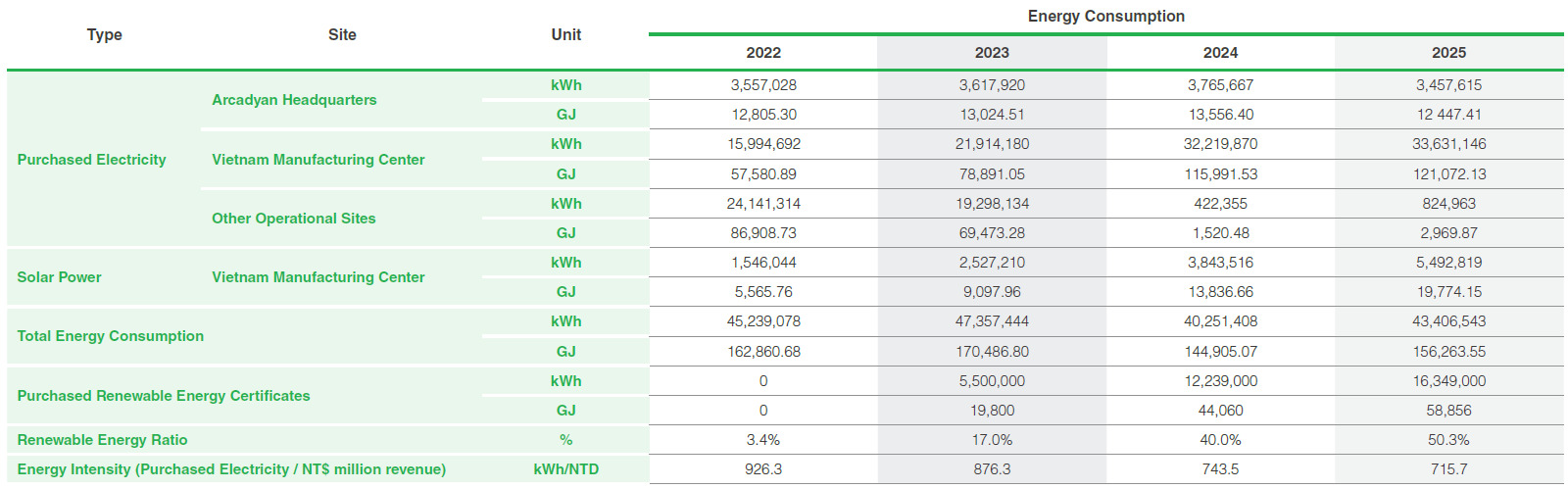
Note: Other operating sites include Tatung Technology Inc., Compal Networking (KunShan) Co., Ltd., and Arcadyan Technology Corporation (Shanghai).
Energy Management and Green Production
In response to global trends in climate change and sustainable operations, Arcadyan has implemented the ISO 50001 Energy Management System at its Taiwan Headquarters and Vietnam Manufacturing Center. We conduct annual energy reviews and assessments of major energy-consuming equipment, establish energy performance indicators and baseline monitoring, collect energy data, and develop supervision and measurement plans. Through systematic energy management and energy-saving projects, we continuously optimize process electricity efficiency and production energy performance.
At our operational sites, the Hsinchu Headquarters conducted an inventory of high-energy-consuming equipment such as chillers and cooling towers, and introduced automated energy monitoring systems, variable frequency control devices, and temperature monitoring interfaces. This enables the system to dynamically adjust equipment operation based on real-time temperature feedback, stabilizing air conditioning temperatures, enhancing equipment efficiency, extending asset lifespan, and reducing energy waste and maintenance costs.
The Vietnam Manufacturing Center has established a 24-hour central energy monitoring system with real-time energy consumption analysis, anomaly detection and alerts, energy diagnostics, and energy-saving strategy feedback. This system enables immediate visibility into power usage and optimized energy dispatch. Moving forward, Arcadyan will continue optimizing hardware and software configurations across its facilities to enhance resource efficiency at the source and build a smart, energy-saving green production model.
ISO 50001 Energy Management System – Energy-Saving Project Performance
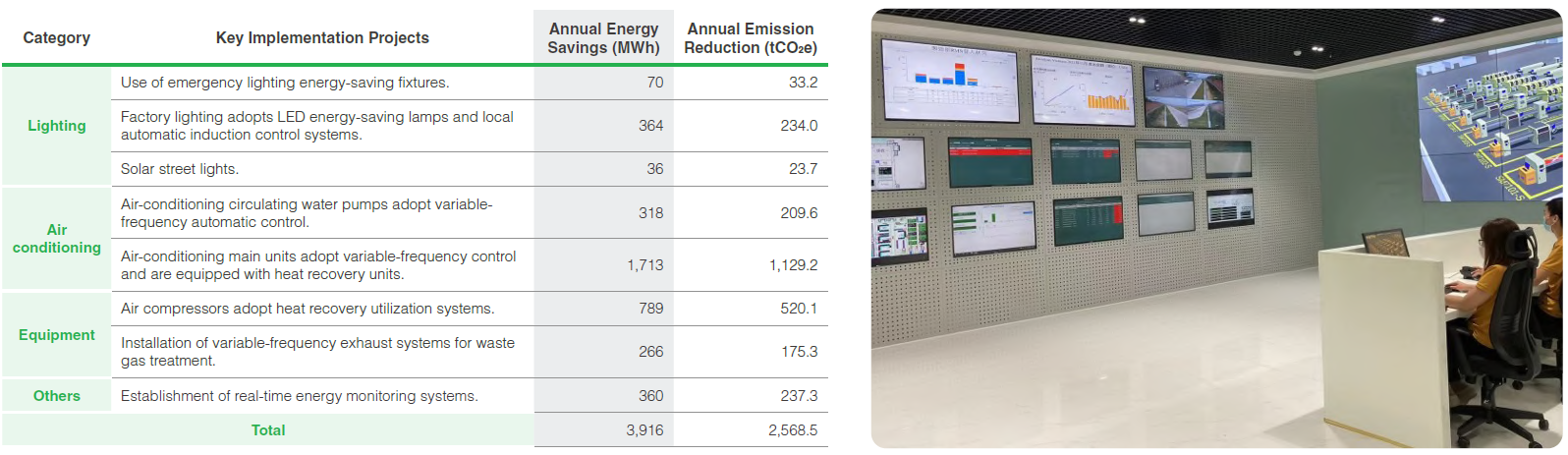
Waste Heat Recovery and Process Energy Saving
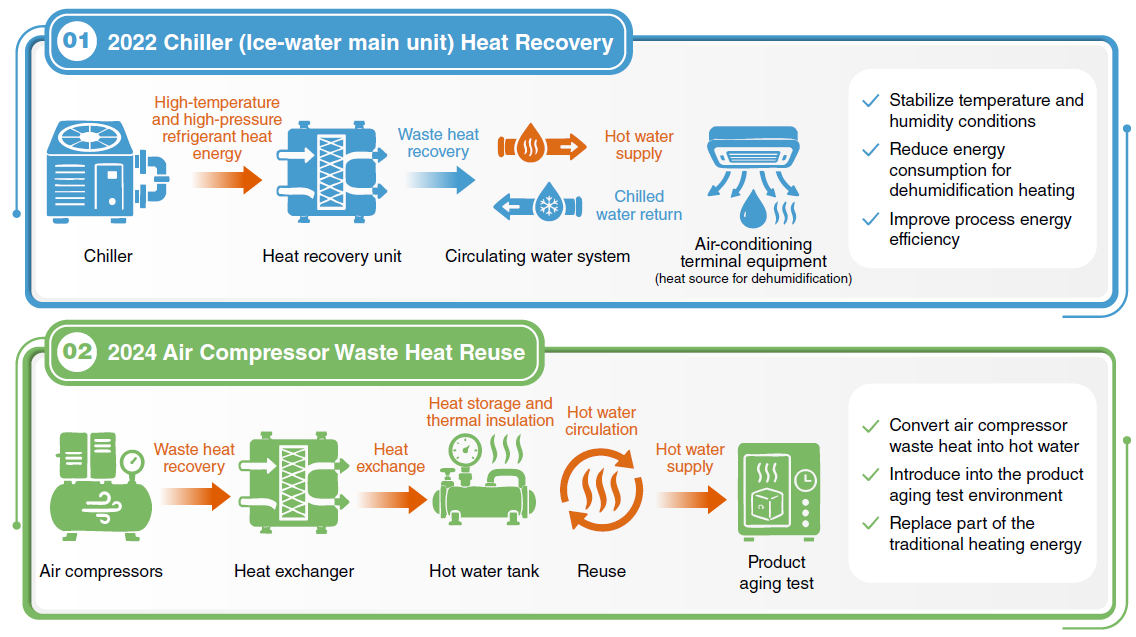
To improve energy efficiency, Arcadyan has operated a waste heat recovery system at its Vietnam Manufacturing Center since 2022. The system recovers waste heat from chillers to provide hot water for air dehumidification, improving production environment control while reducing energy consumption. Waste heat generated by air compressors is also recovered and reused as a heat source for product aging tests, replacing part of the heating demand and further improving energy efficiency.
The system effectively saves approximately 2,500 MWh of energy and significantly reduces carbon emissions by nearly 1,650 tCO2e annually, while consistently maintaining a stable and reliable product testing environment.
Arcadyan Headquarters Smart Power Management Initiative
Since 2023, Arcadyan’s Hsinchu headquarters has partnered with an external energy technology service provider to implement an energy management project. The initiative focuses on identified energy hotspots, such as high-consumption air-conditioning systems including chillers and cooling towers. Through energy-use structure analysis and the introduction of automated monitoring systems, the project has enhanced transparency and visualization of energy consumption. Variable frequency drives (VFDs) and temperature monitoring interfaces were installed on the chillers to transmit real-time temperature data to the central controller, which automatically adjusts the motor operation accordingly. This has improved system responsiveness and efficiency, reduced energy waste, and ensured stable indoor temperatures. Additionally, the installation of VFDs and monitoring interfaces has extended equipment lifespan and lowered maintenance costs. Arcadyan will continue to leverage innovative technologies and effective power management to advance its sustainability objectives.

Vietnam Manufacturing Center Energy Monitoring Control Room
In 2023, Arcadyan’s Vietnam Manufacturing Center established a real-time Energy Monitoring Control Room, supported by a 24/7 central monitoring system. The system enables energy consumption analysis, real-time alerts, and diagnostic functions to ensure transparency in electricity use and effective implementation of energy-saving measures. It promptly identifies abnormal consumption patterns and facilitates adjustments to optimize energy efficiency. As a result, the system saves approximately 360 MWh of electricity annually, equivalent to around 260 metric tons of carbon emissions. These efforts not only reduce energy costs but also minimize environmental impact, advancing Arcadyan’s goal of green production.

Water Resource Management
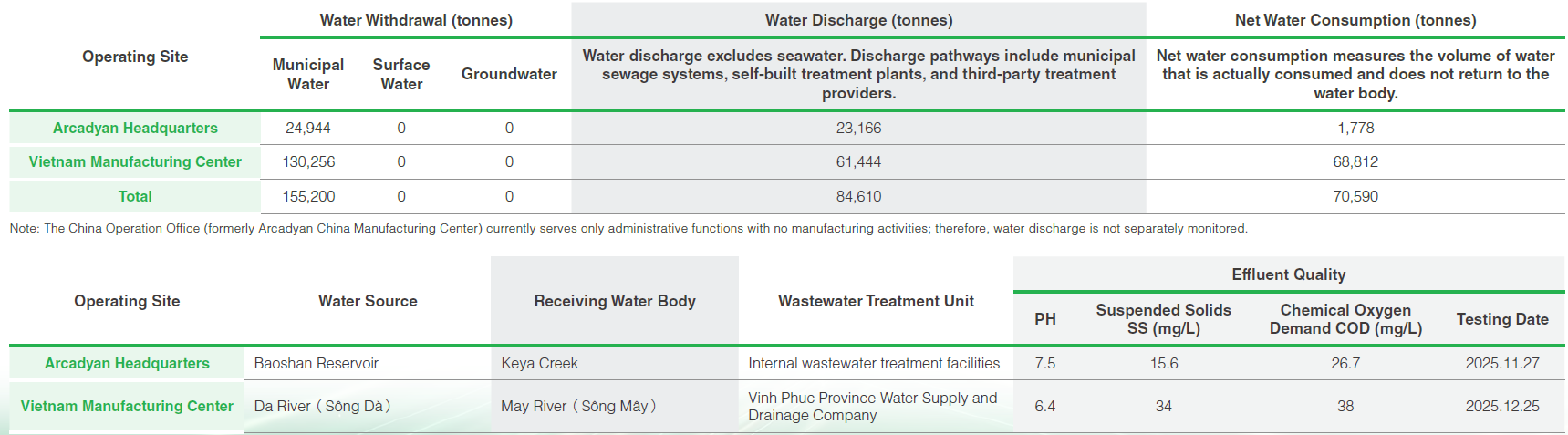
Water is a vital resource for both Arcadyan's operations and its employees' daily needs. Although our headquarters and manufacturing facilities do not involve water-intensive production, we are committed to responsible water stewardship to reduce local water stress and strengthen operational resilience. All water is sourced from municipal supplies and supplemented by rainwater harvesting and reclaimed domestic wastewater. Arcadyan does not directly withdraw surface water or groundwater. Arcadyan enhances water management transparency through annual participation in the Carbon Disclosure Project (CDP), benchmarking its water management, risk identification, and governance practices. In 2025, Arcadyan earned a B rating in the CDP Water Security assessment, recognizing its effective water management framework and ongoing efforts in water monitoring, rainwater harvesting, and reclaimed domestic wastewater use to improve water efficiency.
Arcadyan operates site-specific water treatment systems tailored to each facility to ensure wastewater discharge complies with regulatory requirements and minimizes environmental impacts. At its headquarters, water is used primarily for domestic purposes, with grease traps installed in dining and kitchen areas to prevent oil and grease from entering the municipal drainage system. At the Vietnam Manufacturing Center, an electronics assembly facility without water-intensive production, water is used for domestic purposes, HVAC cooling towers, closed-loop cooling systems, and landscape irrigation.
Arcadyan discharges domestic wastewater through municipal sewer systems or industrial zone treatment facilities in compliance with environmental regulations. Annual third-party testing monitors key water quality parameters, including pH, suspended solids (SS), chemical oxygen demand (COD), ammonia nitrogen, total phosphorus, and total nitrogen, ensuring compliance with local discharge standards. In 2025, Arcadyan recorded zero environmental non-compliance incidents, zero material spills, and zero water-related lawsuits exceeding NT$2 million across all operations.
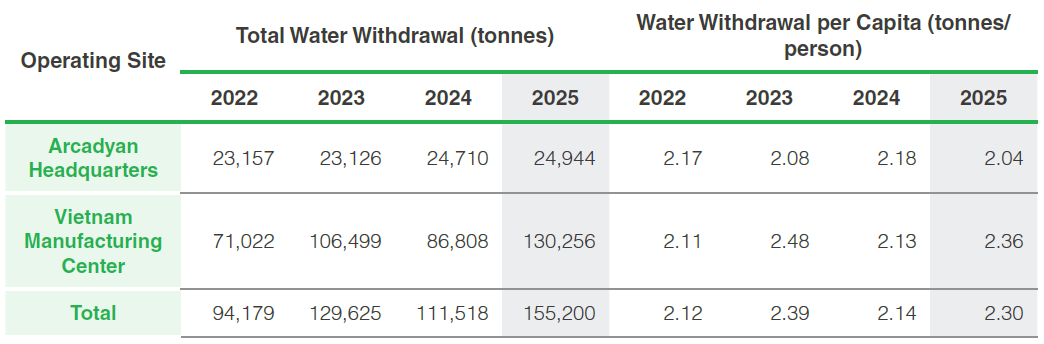
Water Conservation and Intensity Performance
In 2025, Arcadyan recorded an average monthly water intensity of 2.3 metric tons per employee, a 7.5% increase from 2024, falling short of its 1% annual water reduction target. The increase resulted from a membrane bioreactor (MBR) malfunction at the Vietnam Manufacturing Center in June 2025, which reduced reclaimed water production and increased municipal water withdrawal. System restoration is scheduled for completion in April 2026, followed by continued monitoring and increased recycled water use to improve operational efficiency and reduce water intensity. Going forward, Arcadyan will continue optimizing water management across its operations through water-saving equipment, rainwater harvesting, and domestic wastewater reuse to improve water use efficiency.
Rainwater Harvesting System
Arcadyan improves water-use efficiency through rainwater harvesting, reclaimed water utilization, and water-saving systems tailored to each facility. At its headquarters, harvested rainwater is used for nonpotable purposes, including landscape irrigation, reducing reliance on municipal water supplies. The Vietnam Manufacturing Center operates a rainwater harvesting system that collects and filters rainwater for toilet flushing and landscape irrigation, reducing municipal water consumption. Arcadyan will continue optimizing rainwater harvesting and reclaimed water use to improve water resource efficiency across its operations.
Domestic Wastewater Recycling and Filtration Systems
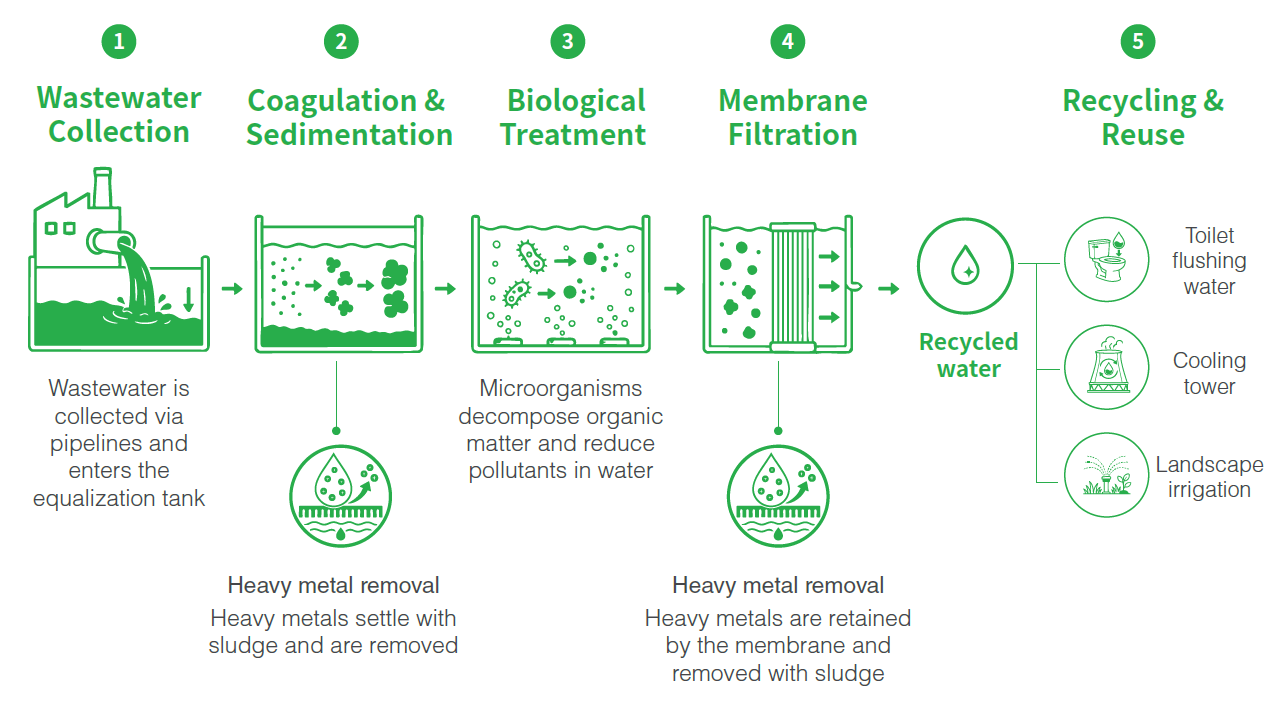
Arcadyan's Vietnam Manufacturing Center generates no industrial wastewater, with water used only for domestic purposes, HVAC cooling, and landscape irrigation. Domestic wastewater is treated through a centralized recycling system incorporating coagulation, sedimentation, biological treatment, membrane bioreactor (MBR), and ultrafiltration (UF), then reused for toilet flushing, cooling towers, and landscape irrigation. Automated cleaning and preventive maintenance ensure stable system performance, while excess treated effluent is discharged to the industrial park's centralized treatment network under continuous monitoring of pH, temperature, Chemical Oxygen Demand (COD), Total Suspended Solids (TSS), and ammonia nitrogen to ensure compliance with local standards. In 2025, Arcadyan recovered 61,444 metric tons of water, accounting for 47.2% of total water consumption.