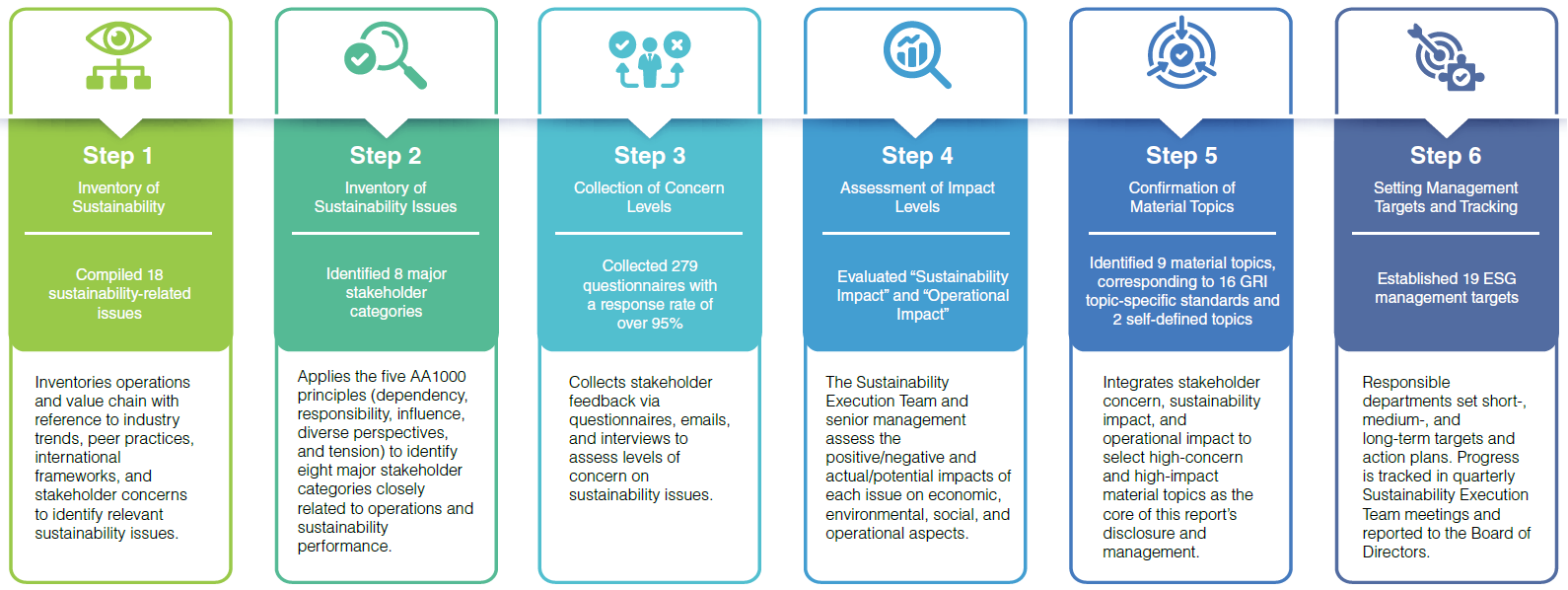
Arcadyan conducts annual materiality assessments in accordance with GRI 3: Material Topics of the GRI Universal Standards 2021. The process integrates a three-dimensional materiality analysis to evaluate the impact of sustainability issues on stakeholders, the external economic, environmental, and social context, as well as the Company's operations. The 2025 materiality assessment results were verified by a thirdparty assurance provider and approved by the Board of Directors, serving as the basis for the disclosure content and sustainability management targets in sustainability report.
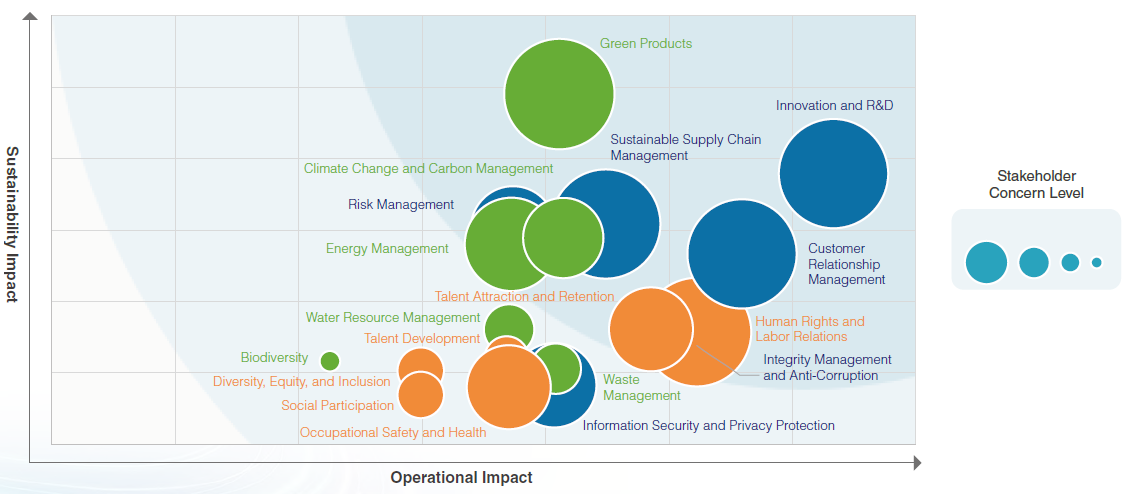
In 2025, Arcadyan enhanced its materiality analysis by adopting a three-dimensional framework—"Stakeholder Interest," "Sustainability Impact," and "Business Impact"—for a more comprehensive assessment of how sustainability topics affect external society and corporate strategies.
- Stakeholder Interest: Feedback was collected via paper and online questionnaires from eight major stakeholder groups on their level of concern regarding the 18 sustainability topics, serving as the basis for external stakeholder assessment.
- Sustainability Impact: The Sustainability Execution Team evaluates the positive and negative impacts of each ESG issue on the external economy, environment, and society, covering areas such as industry technology, customer data protection, green product benefits, renewable resources, supply chain human rights risks, and occupational safety.
- Business Impact: Senior executives assess the influence of each sustainability topic on Arcadyan's four key operational factors- revenue growth, operational risk, customer satisfaction, and employee engagement, to better align materiality analysis with
business strategy and risk management.
Based on the three-dimensional materiality analysis of Stakeholder Interest, Sustainability Impact, and Business Impact, Arcadyan identified nine material topics for 2025. These include Innovation and R&D, Customer Relationship Management, Risk Management, and Sustainable Supply Chain Management in the Economic dimension; Green Products, Climate Change and Carbon Management, and Energy Management in the Environmental dimension; and Human Rights and Labor Relations along with Talent Attraction and Retention in the Social dimension. These topics map to 16 GRI disclosures and two Arcadyan-specific topics, forming the core focus of this report.
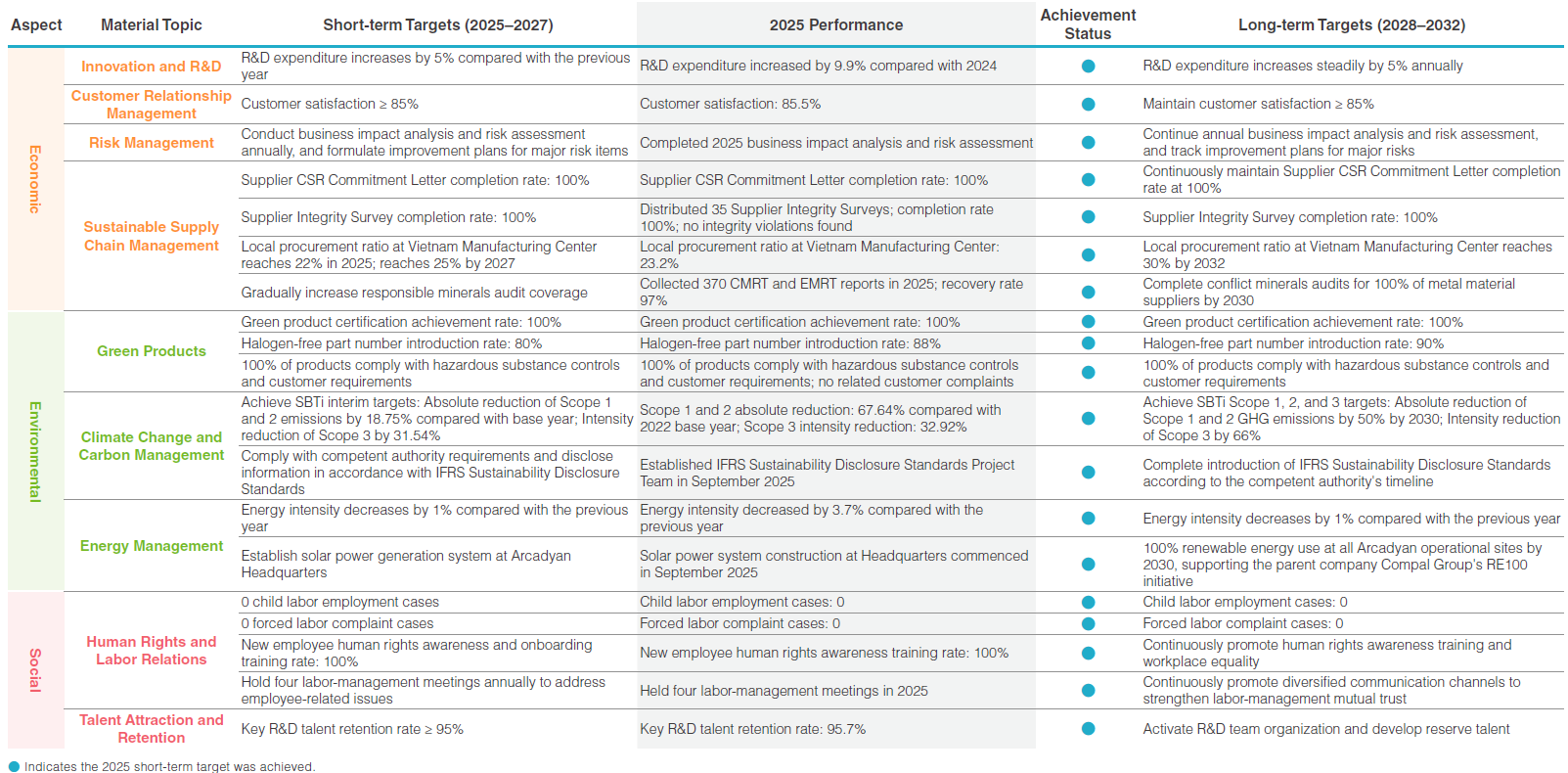
Responsible departments have established short-, medium-, and long-term targets and action plans for each material topic. These are monitored in quarterly meetings and reported regularly to the Board. In 2025, the Company streamlined its sustainability targets from 35 to 19 items to strengthen alignment with material topics, business strategy, and performance management. Items not included in the material topic targets continue to be managed by the respective functional units through daily operations, regulatory compliance, internal audits, or ongoing disclosures in relevant chapters according to their topic attributes.